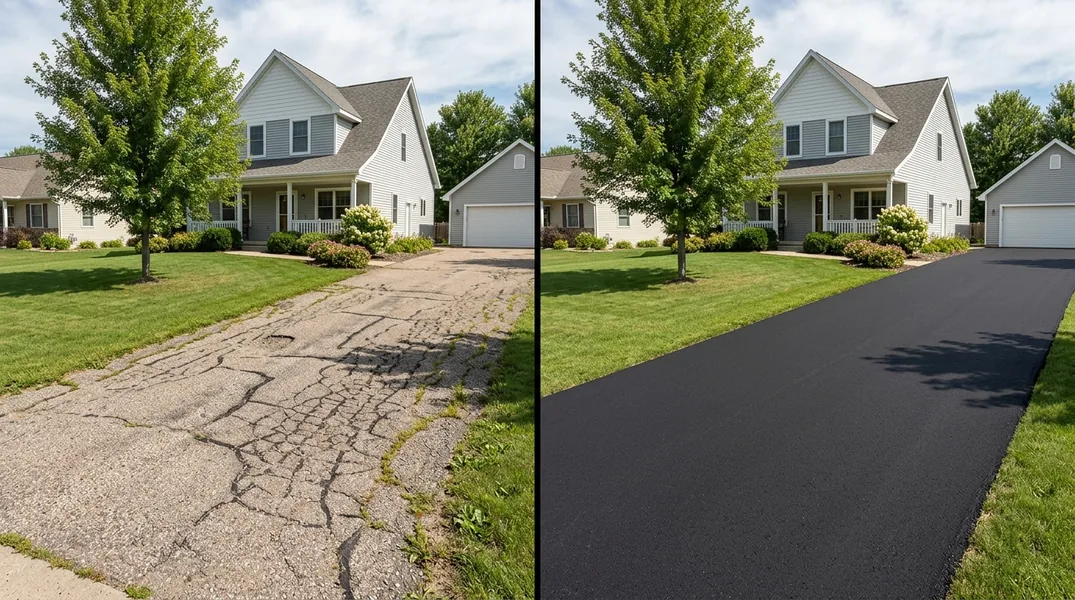
Understanding Asphalt and Tar & Chip Driveways
When it comes time to install or replace a driveway in Eau Claire, homeowners often face a critical decision: should they choose traditional asphalt or explore tar and chip alternatives? Both materials have their merits, but they perform very differently depending on your climate, budget, and long-term maintenance expectations. Understanding the fundamental differences between these two options is the first step toward making an informed choice that will serve your home well for years to come.
Asphalt is a mixture of bitumen (a petroleum byproduct) and aggregate stones that are heated and compacted together. Tar and chip, sometimes called chip seal or macadam, is a more rustic alternative that consists of a layer of tar or bituminous emulsion sprayed onto a gravel base, then topped with loose stone chips that are rolled into place. While both create a dark, functional driving surface, their composition and performance characteristics are quite distinct.
Asphalt Driveways: Durability and Performance in Wisconsin
Asphalt Driveway Paving & Installation is the gold standard for residential and commercial properties across Wisconsin, and for good reason. Asphalt offers superior durability, a smooth driving surface, and proven performance in cold climates like ours. The Eau Claire area experiences freeze-thaw cycles that can be brutal on inferior materials, but properly installed asphalt handles these seasonal stresses remarkably well when maintained correctly.
The typical asphalt driveway lifespan ranges from 15 to 20 years with proper care, though many driveways last longer. This longevity is achieved through regular maintenance, including seal coating every 2 to 3 years and prompt attention to cracks or potholes. Asphalt provides a smooth, quiet driving surface that's comfortable for vehicles and easier to snow plow during Wisconsin winters. The material is also recyclable, making it an environmentally responsible choice for conscientious homeowners.
Tar and Chip Driveways: Budget-Friendly but High Maintenance
Tar and chip driveways appeal to homeowners looking for a lower upfront cost compared to traditional asphalt. The initial installation is indeed less expensive, which can be attractive if you're working with a tight budget. However, this initial savings often comes at the cost of long-term durability and maintenance demands. Tar and chip surfaces are more prone to raveling (where the stone chips loosen and scatter), rutting, and deterioration under heavy traffic or extreme weather conditions.
In Wisconsin's climate, tar and chip driveways face particular challenges. The freeze-thaw cycles that occur every spring and fall can cause the tar binder to become brittle and crack, allowing moisture to penetrate the surface. This leads to faster deterioration and a shorter lifespan, typically 5 to 7 years before significant repairs or replacement becomes necessary. Additionally, tar and chip driveways require more frequent maintenance, including resealing and stone replacement, which can quickly eliminate any initial cost advantage. Loose stones can also be problematic for vehicles and landscaping, and the surface can be dusty during dry periods.
Asphalt vs. Concrete Driveway: Where Does Tar and Chip Fit?
When homeowners research driveway options, they often compare asphalt vs concrete driveway choices, but tar and chip adds a third option to the conversation. Concrete driveways are extremely durable and require minimal maintenance, but they're also the most expensive option upfront and can crack in freeze-thaw climates. Asphalt offers a middle ground: reasonable upfront costs, good performance in cold weather, and manageable maintenance. Tar and chip, while cheaper initially, falls short in durability and ends up requiring more hands-on care than either asphalt or concrete.
For most Eau Claire homeowners, the comparison between asphalt and tar and chip comes down to this: are you willing to invest a bit more upfront for a surface that will last longer and require less frequent repairs? Or would you prefer minimal initial expense while accepting higher maintenance costs and a shorter lifespan? The answer depends on your priorities, budget, and how long you plan to stay in your home.
Can You Install Asphalt Over Concrete or Tar and Chip?
A common question homeowners ask is whether they can apply asphalt over an existing surface. The answer is yes, but with important caveats. Asphalt over concrete driveway installation is possible and can be a cost-effective way to refresh an old concrete surface. However, the concrete must be in reasonably good condition without significant cracks, heaving, or drainage problems. If the underlying concrete is failing, simply placing asphalt on top won't solve the structural issues and may create problems down the road.
Applying asphalt over an existing tar and chip surface is generally not recommended. The loose stones and uneven surface of tar and chip don't provide a stable base for new asphalt, and the adhesion between layers can fail. In most cases, the tar and chip material must be removed and the base properly prepared before new asphalt is installed. If you're considering upgrading from tar and chip to asphalt, professional assessment is essential. Contact Eau Claire Asphalt Paving at (534) 444-7192 to discuss your specific situation and get expert guidance on the best approach.
Asphalt Driveway Paving & Installation Cost in Eau Claire: What to Budget
Understanding the financial investment required for each driveway type helps homeowners make realistic decisions. Asphalt driveway paving typically costs between 3 to 5 dollars per square foot, depending on the thickness, base preparation, and current site conditions. A standard 600-square-foot driveway (roughly 20 feet by 30 feet) would cost roughly 1,800 to 3,000 dollars. Tar and chip is cheaper upfront, usually running 1 to 2 dollars per square foot, but remember that this savings evaporates quickly when you factor in frequent maintenance and repairs.
When evaluating pricing from different contractors, consider the total cost of ownership, not just the initial installation fee. Asphalt requires seal coating every 2 to 3 years (typically 100 to 300 dollars per application) and occasional Pothole Repair & Asphalt Patching or Asphalt Resurfacing & Overlay work. Tar and chip requires more frequent stone replacement and resealing, often annually or every other year. Over a 20-year period, asphalt typically proves more economical. For a detailed breakdown of costs specific to your property, request a free estimate from Eau Claire Asphalt Paving.
Making Your Decision: Which Material Is Right for Your Home?
Choosing between asphalt and tar and chip ultimately depends on your priorities and circumstances. If durability, minimal maintenance, and reliable performance in Wisconsin winters are your top concerns, asphalt is the clear winner. It handles freeze-thaw cycles well, provides a smooth driving surface, and offers excellent value over its lifespan. If you're looking at a property you'll only occupy for a few years and want to minimize upfront costs, tar and chip might seem appealing, but be prepared for the reality of frequent maintenance and eventual replacement.
For most homeowners in Eau Claire, asphalt represents the best balance of affordability, durability, and performance. The proven track record of asphalt in northern climates, combined with reasonable maintenance requirements and manageable costs, makes it the preferred choice for residential driveways. If you're ready to move forward with a quality asphalt installation or need advice on upgrading an existing driveway, the team at Eau Claire Asphalt Paving is here to help. Call us at (534) 444-7192 or visit our website to schedule your consultation today.
Looking for a professional asphalt paving contractor in Eau Claire? Eau Claire Asphalt Paving responds fast for all your asphalt paving needs.
Get a Free Quote